
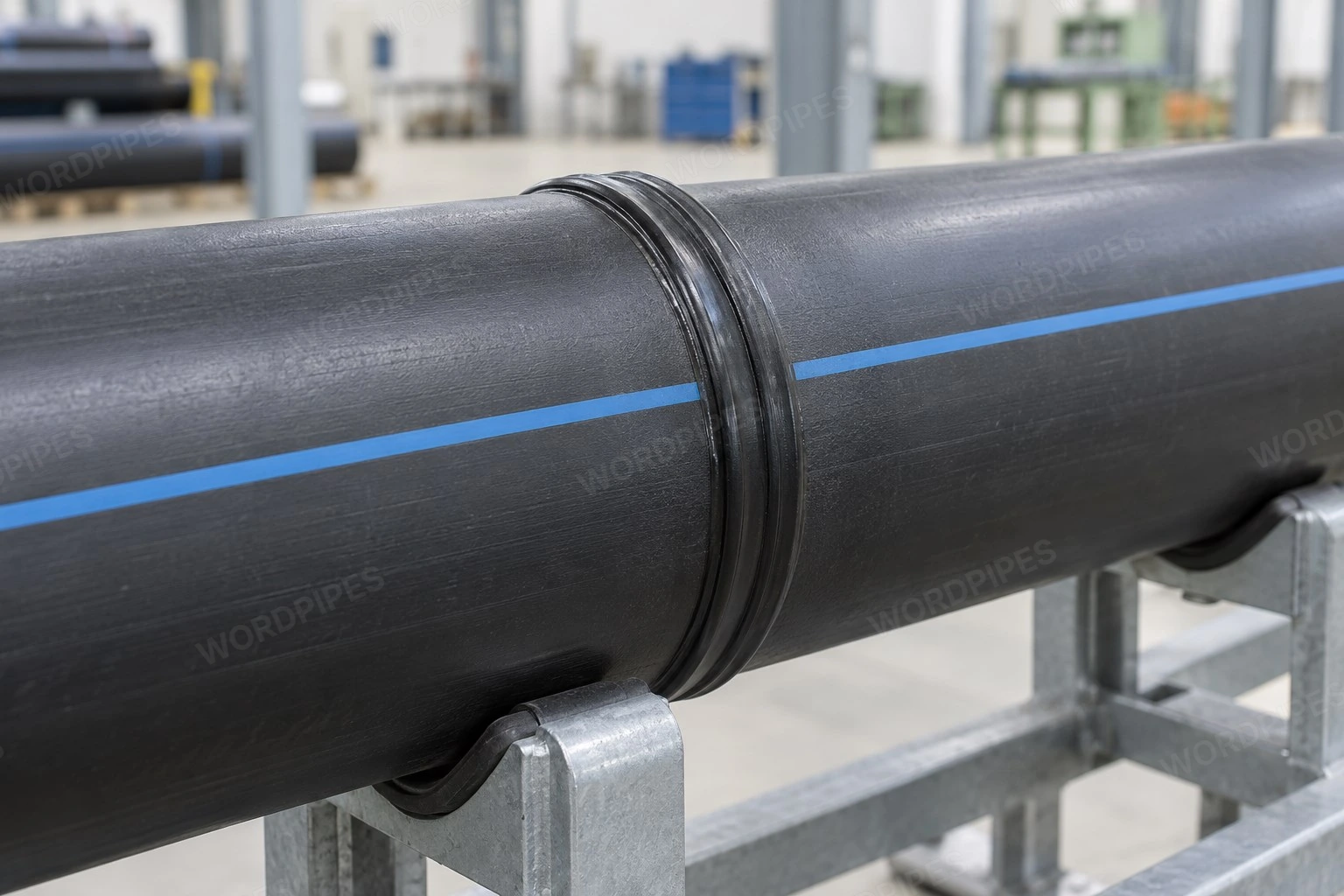
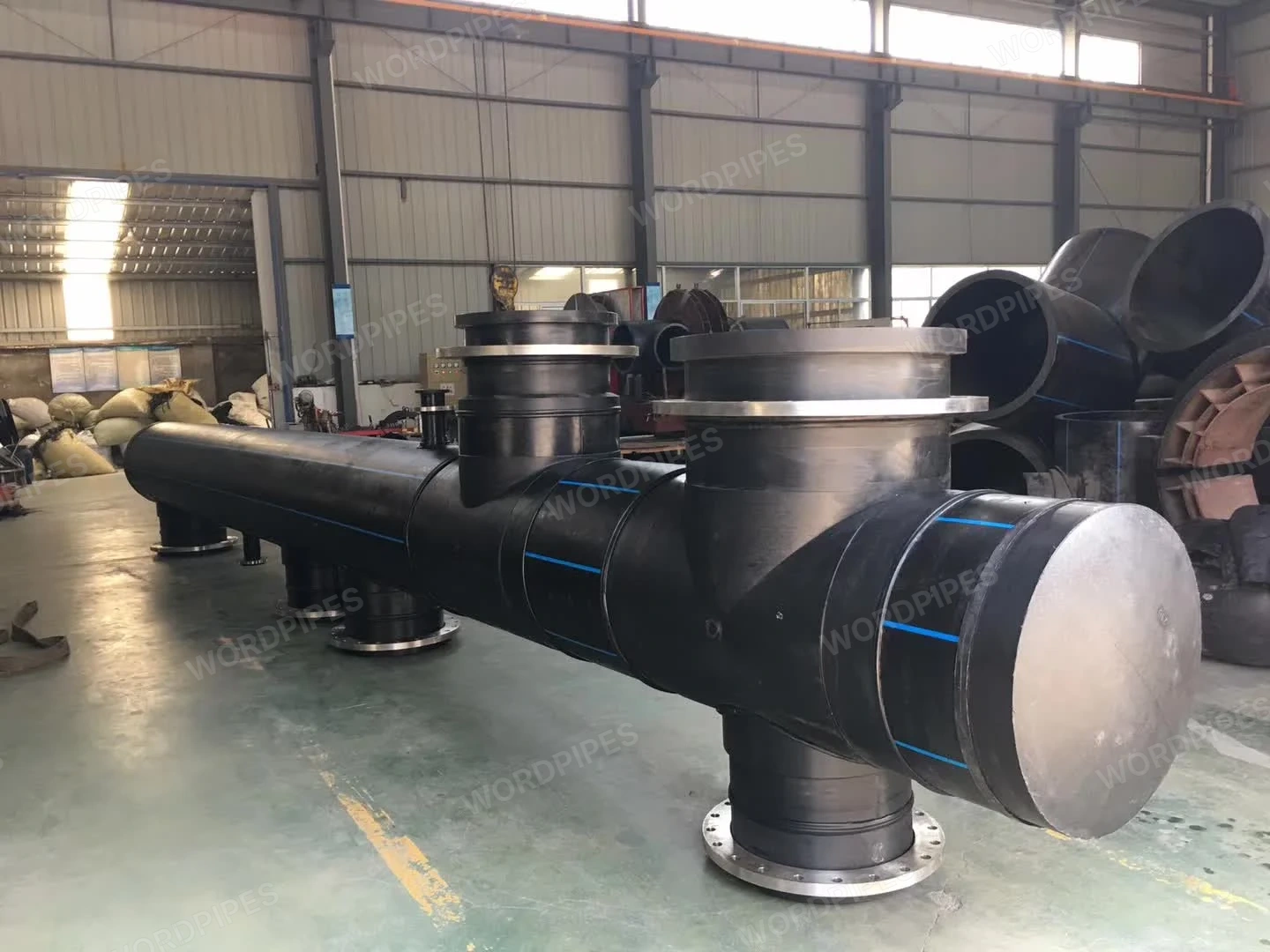
Our fabrication photo archive includes HDPE assemblies with branches, bends and flanged ends. These examples show why a request for a fabricated component needs more information than a product name and a quantity. A drawing package gives the quotation a defined starting point.
Identify the drawing and dimensions
Send a legible drawing with its reference, revision and units. Mark each assembly with an item number that also appears in the quantity list. Identify the required pipe material and size, wall specification, overall lengths, branch positions and connection orientation.
Distinguish dimensions that locate the connections from dimensions shown only for reference. Include the tolerances required by the project and flag any details that still need confirmation. This makes changes between drawing revisions easier to discuss.
Describe every connection interface
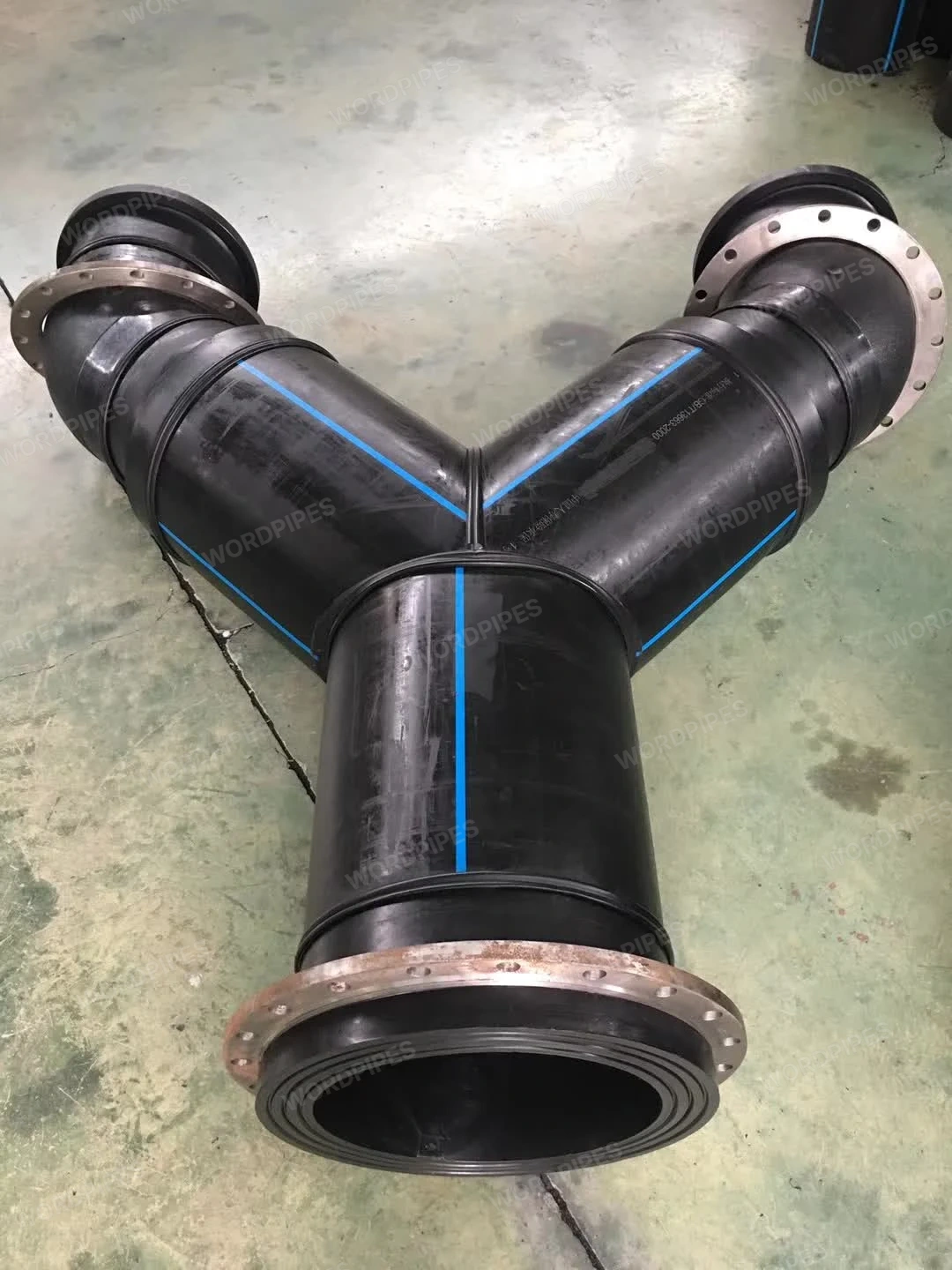
For flanged ends, provide the mating flange specification, drilling details and orientation required by the installation. Identify which loose flanges, gaskets, bolts or other accessories belong in the requested supply. Where the assembly connects to an existing system, include the relevant interface drawing or information from the project designer.
Separate the technical scope from delivery details
- List the quantity of each drawing item and revision.
- State the required inspection documents, identification marks and any approval stage before fabrication.
- Describe delivery restrictions, packaging needs and the intended unloading arrangements.
- Identify who will confirm the final drawing and acceptance requirements.
The photographs illustrate assembly forms in our archive. Your project's dimensions and requirements should be supplied in the drawing package, so the proposed configuration and supply scope can be reviewed together. Contact WORDPIPES with the drawing reference and item list to begin that review.
Source: WORDPIPES fabricated-component photo archive